Recycling
Recycling & Waste Management
Collection, sorting, processing and disposal strategies for your building's waste and recyclables.
Chapter 01
Where a building's waste stream goes wrong
In most commercial buildings the waste problem is not dramatic, just steady. Bins overflow before the next visit, recycling and garbage end up mixed in the same bag, and flattened cardboard stacks up in the back hallway until somebody trips over it. Each of these is small, and together they make a building look neglected to staff and visitors alike.
Mixed streams are the costly one. A single bag of food waste dropped into a clean recycling bin can spoil the rest of the recycling in the bin, and staff who see that happen stop sorting at all. Clear stations, clear liners and bins that are emptied before they overflow keep people sorting the way they meant to when they walked in.
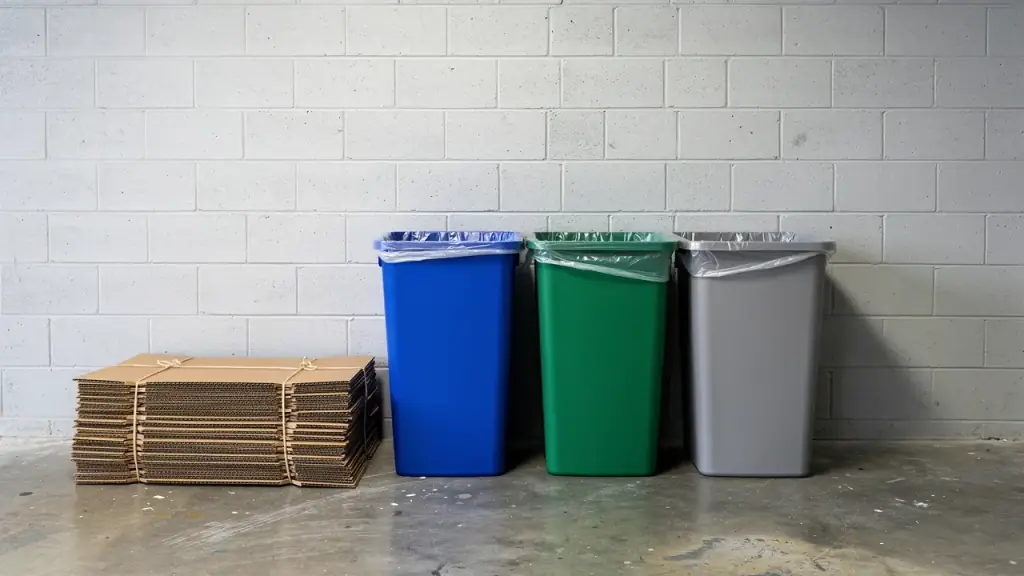
A back-of-house recycling station with three sorting bins and bundled cardboard
Collection, sorting, processing and disposal
Quality Clean's recycling and waste management covers four things: collection, sorting, processing and disposal strategies for the waste and recyclables a building produces. The word strategy matters. The aim is not only to carry bags to a bin, but to decide what leaves your building, in which stream, and how often, so the routine fits the way you actually work.
Collection starts inside, at the desk-side bins, the break room and washrooms, and finishes at the back-of-house station where bags are consolidated. Sorting separates paper, cardboard, containers and general waste into their own streams with fresh liners. Processing and disposal are about what happens next, so the bundles and bags you hand off are ready for whatever collection arrangement your building uses.
Cardboard deserves a line of its own. Delivery boxes take up far more room than the goods that came in them, so breaking them down and bundling them on each visit keeps the back room usable. A building that gets a week of deliveries and no flattening ends up with a stack nobody wants to touch.
Chapter 03
Fitting waste runs into the cleaning schedule
Waste handling works best when it rides along with the cleaning rather than sitting beside it. The same visit that empties the bins, wipes the station and replaces the liners also bundles the cardboard and checks that the streams are still separate. Nothing waits for a special trip, and nothing relies on someone remembering to ask.
It also pairs naturally with supply restocking and janitorial work in a Fort St John building, so one team sees the whole picture: what is being used, what is being thrown out and where the routine is slipping. If a bin keeps overflowing, that is a signal to change the schedule or add a station, not to keep emptying it faster.
To scope it for your building, book the free on-site assessment. Someone visits, takes measurements and walks the space, then you receive an itemized quote and a service agreement to sign online. A phone call for the booking deposit secures your date. Questions first? Call 844-427-8254.
Free on-site assessment. Itemized quote and service agreement signed online. No lengthy contracts.